

Blog&News
February 3rd, the flight from New Delhi to Varanasi was delayed due to fog, and we arrived in Varanasi in the evening.
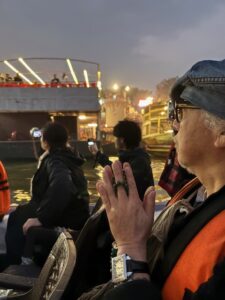
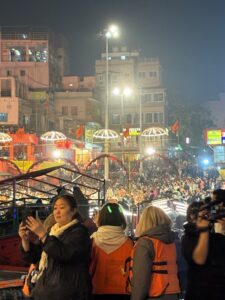
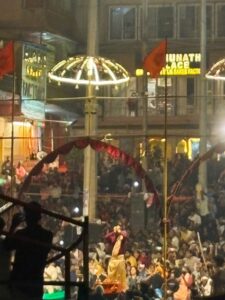
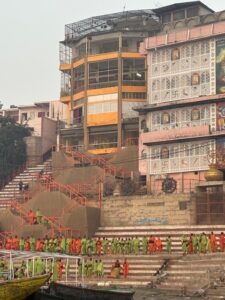
We immediately headed to the Ganges River to see the mysterious fire-dancing worship ceremony held every night.
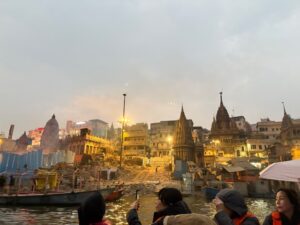
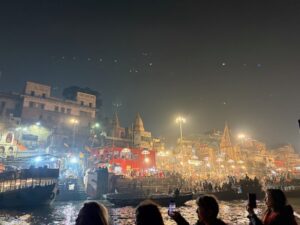
In recent years, due to the sheer number of people and the difficulty of approaching by regular land routes, this time we headed toward the central area by boat from the river.
Varanasi, with over 3,000 years of history, is a major Hindu holy site. The rituals of gratitude and worship for the sacred river Ganges (the goddess) create a fantastical scene where the voices of worshippers and gathered people praying, and the sound of gold, resonate, inviting us into 3,000 years of history.
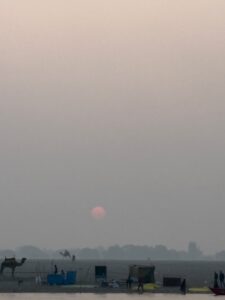
The next morning, February 4th, we boarded a boat at dawn to watch the sunrise over the sacred river Ganges.
Smoke rose from the cremation grounds, a daily confrontation with death as ordinary as breathing—a world where humans turn to ashes, where all things are impermanent.
A beautiful sunrise rose over the desert on the opposite shore.
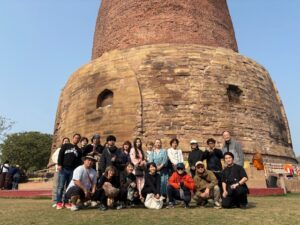
We hurried back to the hotel and rushed northward 10 kilometers to visit Sarnath. This is where Buddha delivered his first sermon, and a massive stupa stands here. This is the world of the 3rd century BC. Sarnath means “deer park.”
After that, we visited temples built by Sri Lankan Buddhist groups for the revival of Buddhism and the Sarnath Museum. We felt the era of King Ashoka. He had halted conquests by force, and the era founded on Buddhist teachings governed the empire with the ideals of nonviolence and peace.
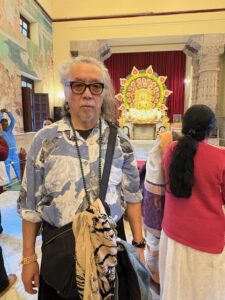
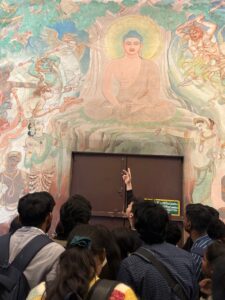
The magnificence of Buddhist philosophy, Sarnath where one feels the Buddha.
