

Blog&News
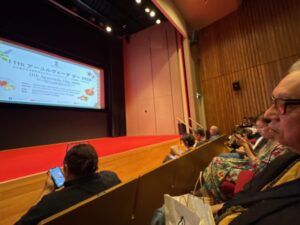
On September 23, we were invited to an Ayurveda Day Seminar Event held at the Indian Embassy.
Today is the Autumnal Equinox, which marks the autumn O-Higan period. Before heading to an event, We visited Ikegami Hongan-ji Temple. Unfortunately, it was raining, but the temple grounds were crowded with people due to the O-Higan festivities.
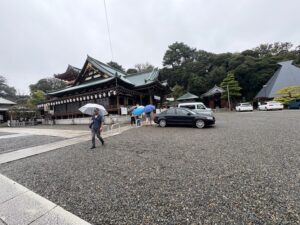
“O-Higan” is a Buddhist term referring to a state of enlightenment free from worldly desires and suffering. In Japan, the three days before and after the Spring Equinox and Autumnal Equinox are collectively called “O-Higan,” and this period is set aside for honoring one’s ancestors.
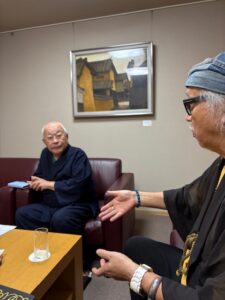
We greeted Reverend Nakano and told him about all the things that had happened since we last saw him.
The lobby of the Indian Embassy was packed with professionals and experts in Indian Ayurveda, and the venue was filled to capacity.
“Ayurveda Day,” an initiative promoted by the Indian government, features lectures and discussions by experts and doctors on the role Ayurveda plays in physical and mental health, disease prevention, and lifestyle improvements.
Many experts took the stage on this day as well.
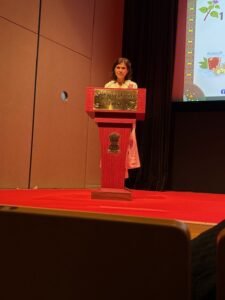
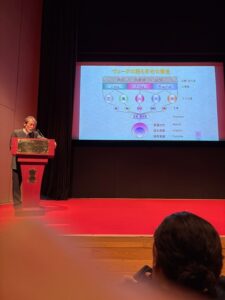
Ayurveda, which originated Sri Lanka in India and has a history of more than 5,000 years, is the world’s oldest traditional medical system. In recent years, as modern science has advanced and revealed new insights, it is said that modern science is increasingly aligning with the principles described in this ancient science.
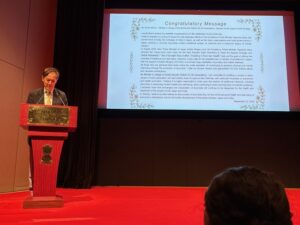
This term, a combination of the Sanskrit words “Ayus” (life) and “Veda” (science and wisdom), means “wisdom for living a better life.” It aims not only to treat illness but also to prevent it and maintain a balance between mind and body in order to achieve a healthy, long life.
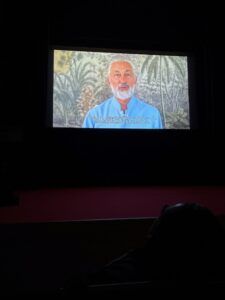
The lecture by Dr. Aoyama, a Ph.D. in science and an Indian philosopher, was truly fascinating, as he touched on the mystery of humanity’s connection to the universe—beyond the realms of medicine and lifestyle—as well as the philosophy of life.
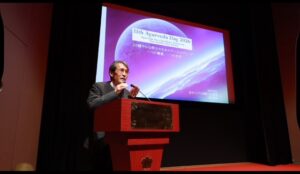
When the universe began, everything was one. And I believe that even now, everything remains intertwined.
Every action “I” take, every word “I” speak, and every thought “I” have may be connected to the entire universe.
“I” am nothing other than the universe itself; in other words, human beings are microcosms, and “I” may be a reality that transcends the material universe.
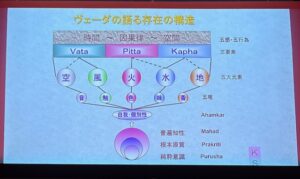
The natural world and our own bodies and minds are composed of three fundamental energies: Vata (“Wind”)—which governs breathing and blood circulation; Pitta (“Fire”)—which governs digestion, metabolism, and body temperature regulation; and Kapha (“Water”)—which governs muscle strength and the immune system. When the balance of any of these is disrupted, it leads to physical discomfort or illness.
These are also the fundamental energies that make up the Earth.
Well, actually, on that day, both of us—Shiozawa and I (Kogure)—had been suffering from gastroenteritis and repeated bouts of diarrhea after a meal the day before, and we were in no condition to eat at all. Three days later, we both came down with high fevers at the same time and were unable to move. After getting tested at the hospital, it turned out we didn’t have the flu or COVID-19.
This clearly means that both of us had lost our basic energy balance.
From an Ayurvedic perspective, this means that Pitta, or “fire,” is the cause of the body’s imbalance.
