

Blog&News
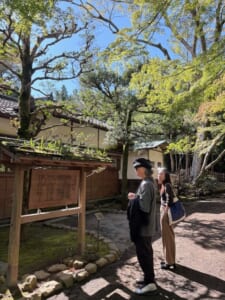
On October 28, Hiroko, the eldest daughter of the Ichise family—who had been so kind to us in Fukui—stopped by Mishima, so we enjoyed a walk from Rakujuen to Hirokoji.
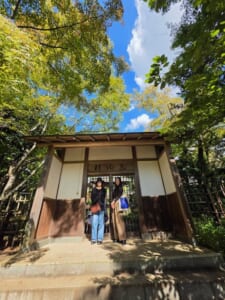
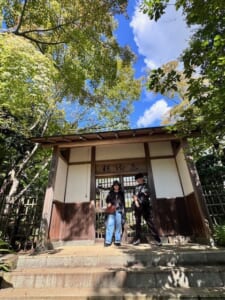
Rakujuen was built during the Meiji era as a villa for Komatsunomiya Akihito Shinno, and after the war, it was designated a municipal park by the city of Mishima.
Prince Akihito of Komatsu was a member of the imperial family who served as a military officer and played an active role in the Meiji Restoration.
Mishima is known as the “City of Water,” where meltwater from Mount Fuji seeps underground and emerges as groundwater. During the Meiji period, the Hakone and Izu regions were popular summer retreats and health resorts among members of the imperial family and the nobility.
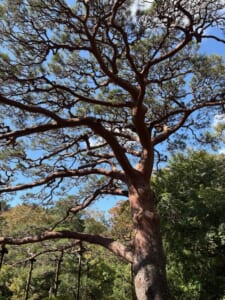
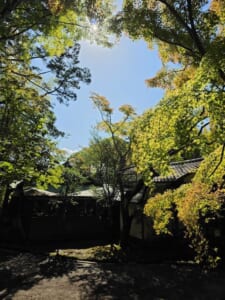
Rakujuen Garden was created by transforming a vast natural forest—which encompassed the sites of temples and shrines that existed as far back as the Edo period, such as the former Aizen-in Temple, Sengen Shrine, and Hirose Shrine, as well as the area around Mount Kohama—into a garden.
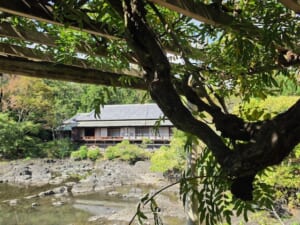
Rakujukan, a Kyoto-style sukiya-zukuri building that retains the charm of a Meiji-era imperial villa, is still open to the public, where visitors can view the fusuma paintings inside.
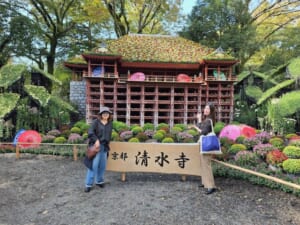
On this day, as part of the Chrysanthemum Festival decorations, there’s a large-scale chrysanthemum display modeled after Kyoto’s Kiyomizu-dera Temple, which has a slightly humorous charm.
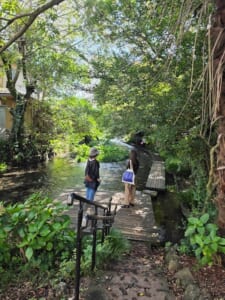
When you exit through the south exit of Rakujuen, you’ll find yourself on the Genpei River promenade. This area still vividly preserves the spirit of Mishima, the “City of Water.” I am truly grateful to the local organizations working hard to maintain this river.
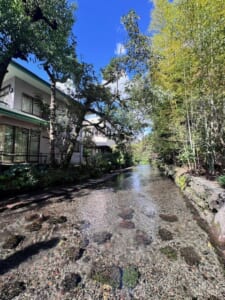
However, Kohama Pond in Rakujuen has remained largely dry for a long time—ever since it dried up in 1962 due to factors such as increased groundwater extraction in the surrounding area during the period of rapid economic growth in the late Showa 30s.
Although high-rise building development is currently underway at South Exit Station, there was a period—coinciding with the progress of the construction—when a decrease in spring water was observed at locations such as “Shirataki Park,” “Genpei River,” and “Sakura River,” all of which are located just downstream of the redevelopment area; this has raised questions as to whether the construction was the cause.
We walked along the promenade to Mishima Hirokoji while discussing how we should address the loss of Japan’s beautiful natural environment—which can be considered one of the country’s greatest assets—as economic activity continues to expand, drawing on topics from the Kyoto Cultural Conference held in Kyoto.
