Blog&News
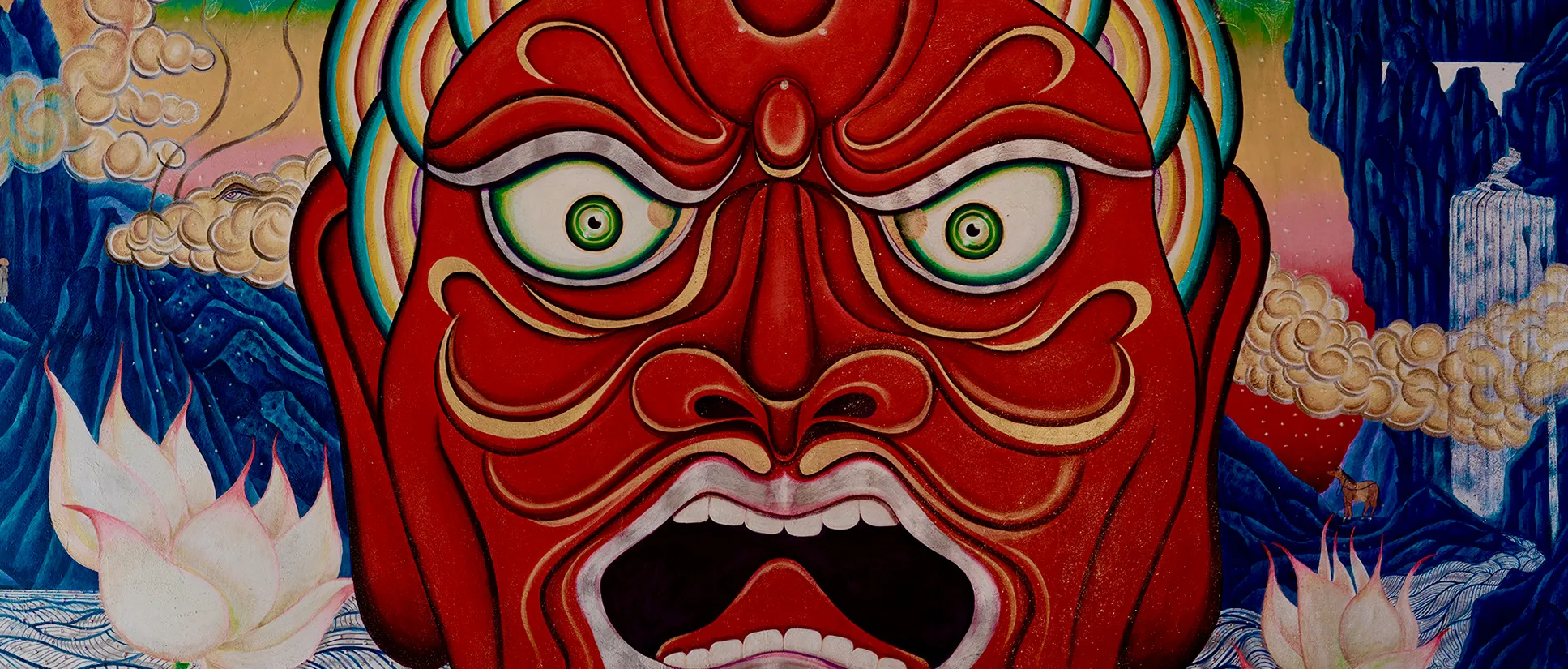
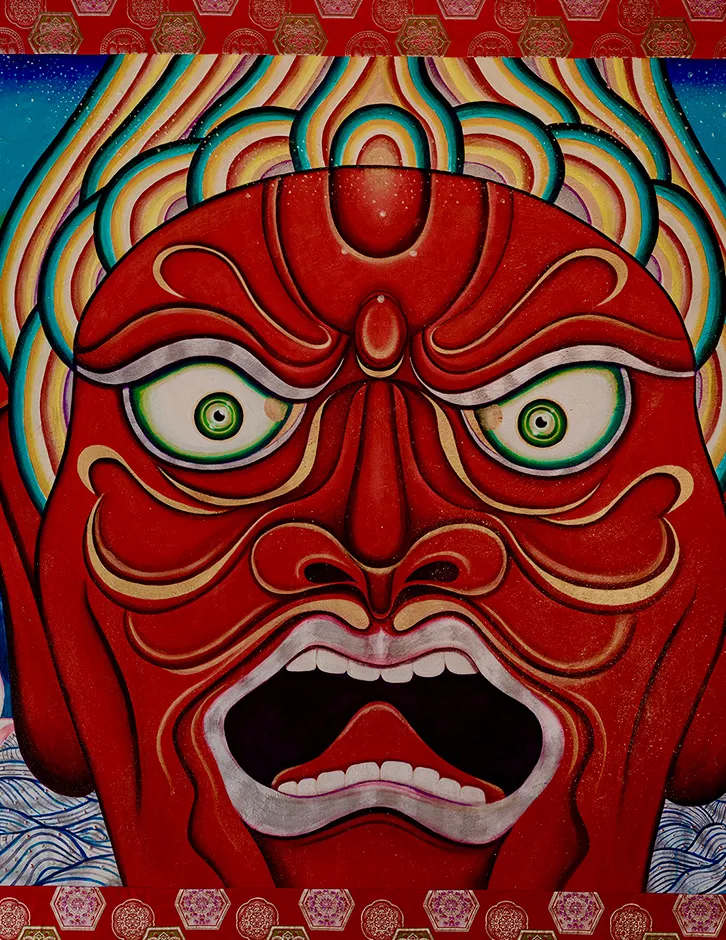
On September 1, we visited a historic temple in Kyoto that was on the verge of being abandoned to encourage the members working on its restoration (this site is not open to the public).
Across Japan today, the abandonment of temples—where they can no longer be maintained—has become a social phenomenon. This is due to unavoidable issues such as a declining birthrate and aging population, depopulation, changing attitudes toward funerals, and a lack of successors. Even a historic Kyoto temple, founded 1,300 years ago by a renowned Buddhist monk, was no exception. Then a team dedicated to its restoration emerged; determined that the loss of this irreplaceable Japanese heritage and culture must not be allowed to continue, they took action.
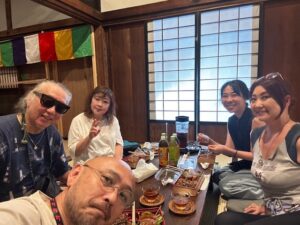
Today, we brought boxed lunches as gifts and heard from them about the current situation. First, we took a commemorative photo over a yakiniku boxed lunch.
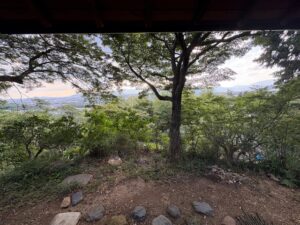
Although the main house is currently undergoing renovation, the view from the west-facing veranda at the mountaintop offers a panoramic view of Kyoto City, and you can even see the skyscrapers of Osaka in the distance. I imagine that the people of ancient times, who prayed for the Western Pure Land, must have gazed upon this very view.
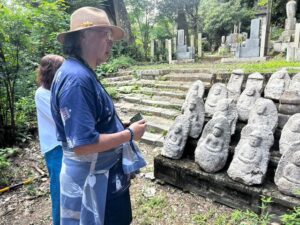
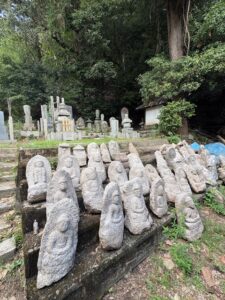
The cemetery, which had been overgrown with vegetation, was neatly restored thanks to the help of many volunteers, and it is said that a large number of Jizō statues were discovered on the temple grounds at that time.
I hear that, due to renovations on the main hall, the Kyoto Museum of Culture is helping to preserve the National Treasure-level Buddhist statues.

The 1,300-year history of this temple is still shrouded in mystery, and I look forward to unraveling it. To the east of the main hall is the Mirror Well, a famous site mentioned in waka poetry since the Heian period, from which spring water flows. I’ve heard that even today, traditional Japanese restaurants come here to draw water. Various paths wind throughout the mountain, leading one to suspect that this may have once been a Shugendō pilgrimage route.
Just as Kyoto’s Gion is associated with the Gion Seisha, this mountaintop was once Vulture Peak. The people of ancient times sincerely embraced the teachings of Shakyamuni of India, and their deep faith is being revived along with the restoration of the temple.
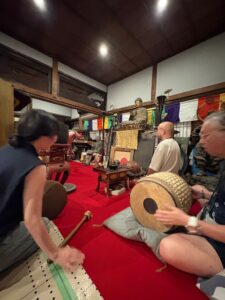
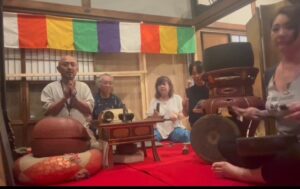
At 5:00 p.m., as the new head priest recited the Heart Sutra, we all performed with percussion instruments together, letting our thoughts drift back to the distant Heian period.
Rise again, Japan! Rise again, the spirit of Japan!