

Blog&News
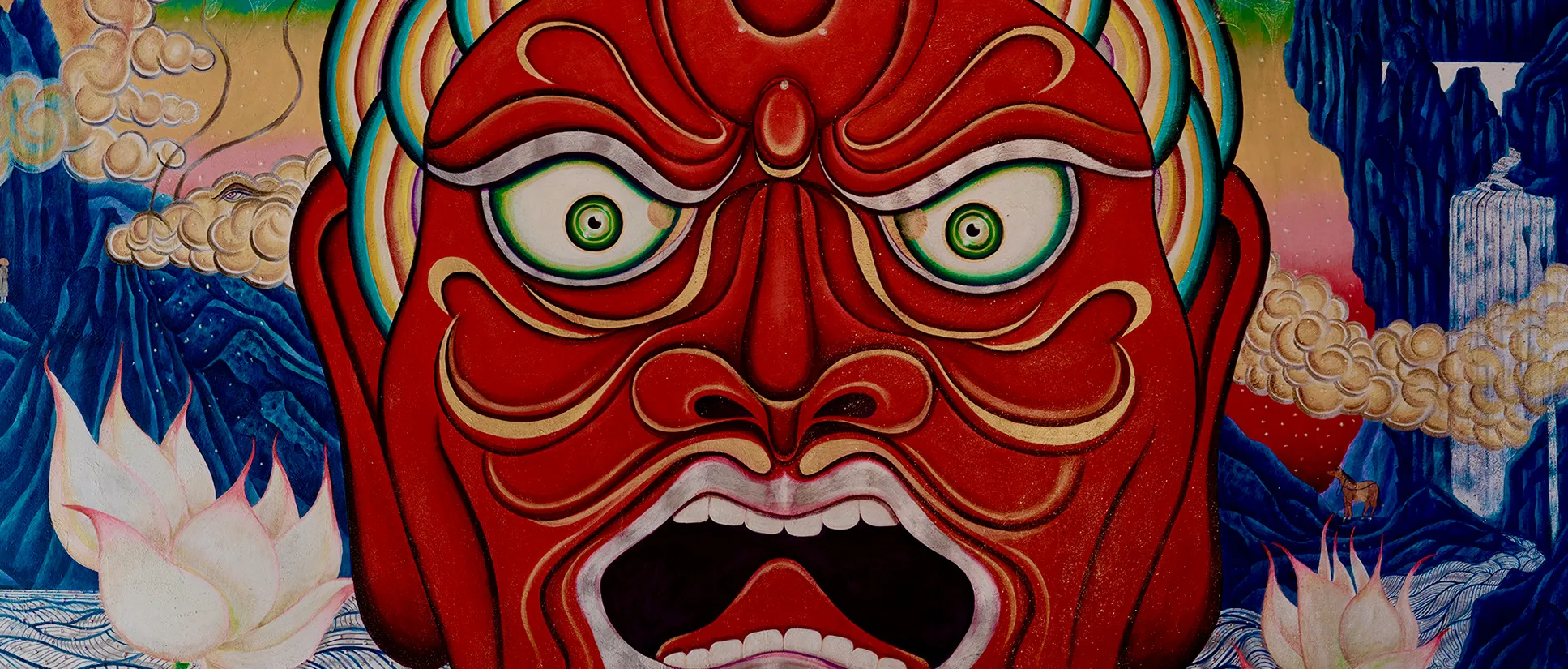
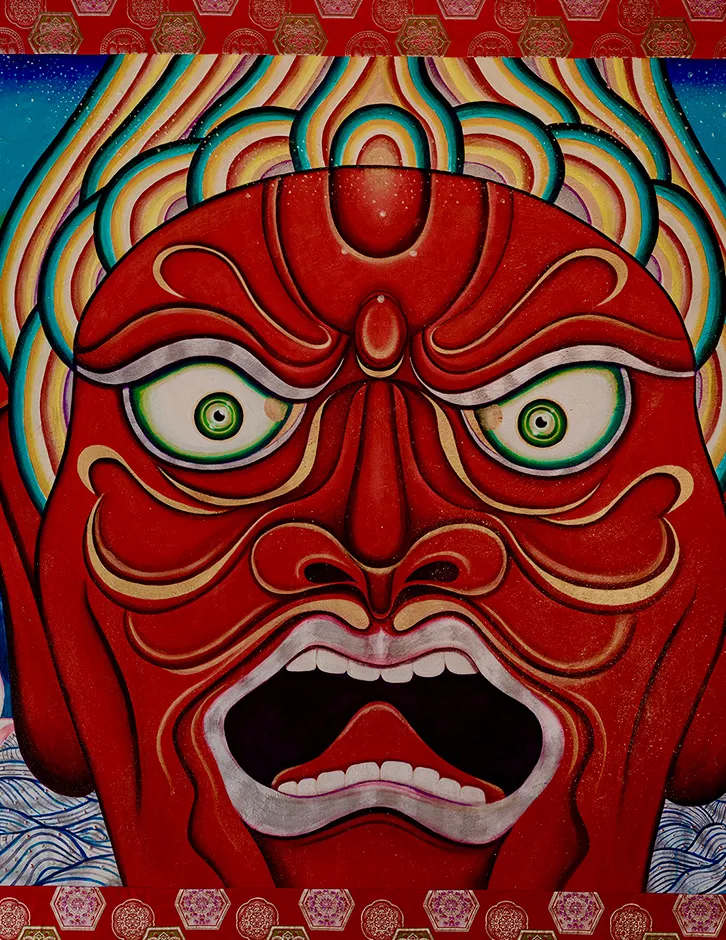

Before the current Ise Grand Shrine was established in Mie Prefecture, there was a site in Fukuchiyama, Kyoto, where Amaterasu Omikami and Toyouke Omikami were enshrined; this place is known as Moto-Ise. In the realm of mythology and ancient texts, it is said to be a mystical site where worship has been practiced since around the 1st century BCE.
An explanation of the pentagram of the Kinki region is posted at the entrance to the Geku Shrine. It is said that the pentagram formed by the five sacred sites—Mount Ibuki, Moto-Ise, Izanagi Shrine, Ise Outer Shrine, and Kumano—has formed a powerful protective barrier since ancient times.

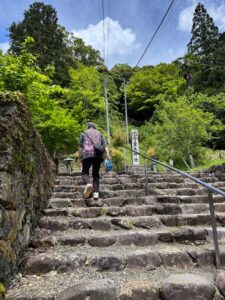
This is the oldest black wooden torii gate made from logs left with their bark intact; passing through it transports you to the solemn atmosphere of ancient Japan.

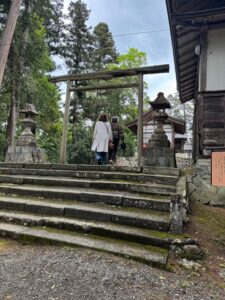
The main hall, located deep within the sacred precincts marked by shimenawa ropes, is remarkably simple. Yet it exudes a solemn beauty, imbued with the spiritual energy of thousands of years of fervent prayer.

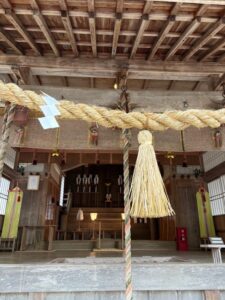
Surrounding the main hall are numerous yashiro—shrines where various deities rest. It is a quiet and mysterious world.

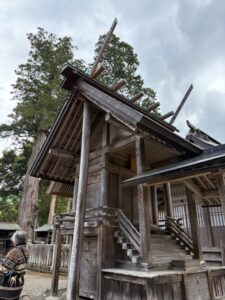
It was raining when we arrived, but just as we started climbing the stairs, it suddenly stopped, and patches of blue sky began to appear.

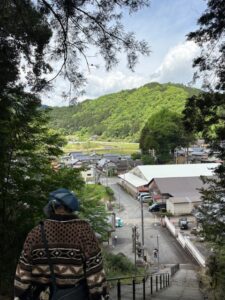
After that, we headed to Naiku Kōtaisha Shrine and walked steadily along the mountain path leading to the main hall.
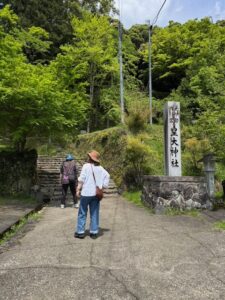
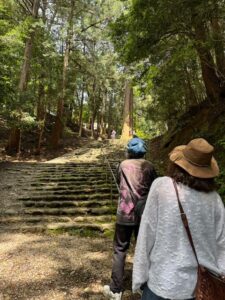
After a while, a magnificent view from the hilltop comes into view.

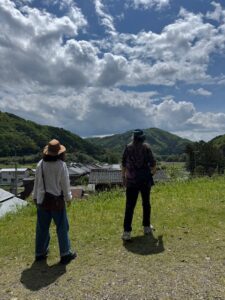
Just before reaching the main hall, the beautiful pyramid-shaped Mount Himuroga-dake is enshrined as the object of worship.


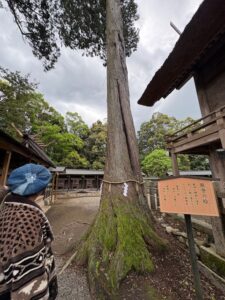
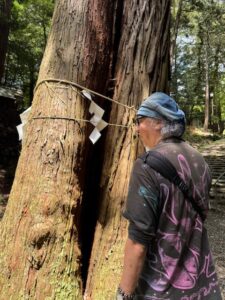
Suddenly, a massive sacred tree appears right in the middle of the path; once you pass through it, you come out into a spacious temple grounds.
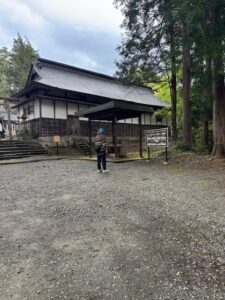


They have a wide variety of banknotes here.

From there, we walked for about five minutes along a mountain path lined with fresh greenery and dappled with sunlight, heading toward Ama-Iwato Shrine, and soon came to a flight of stairs leading down to the river.

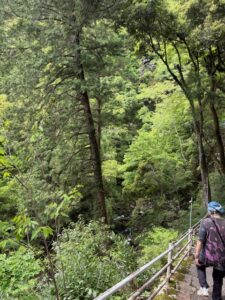
At the bottom of the river, we found the Ama-no-Iwato Shrine perched atop a nearly vertical rock face, accessible only by clinging to a chain, so we hurried over to pay our respects. I cautiously made my way down the rock face, crouching low. It gave me a tremendous sense of accomplishment.


It was sunny while we visited the three shrines—Motoise Geku Toyouke Shrine, Motoise Naiku Kōtaisha Shrine, and Amano-Iwato Shrine—and made our way back to our car in the parking lot, but the moment we got in, it started pouring. The fact that we were able to visit all three shrines smoothly without getting caught in the rain was surely the will of the gods. Thank you very much.
