Blog&News
September was marked by nothing but prolonged rain, but we took a break from Shiozawa’s artwork to go for a walk and soak up the sun on one of the few sunny days. The first time was on September 5. We walked diagonally across the Imperial Palace grounds from Marutamachi to Demachiyanagi. The blue sky was refreshing.
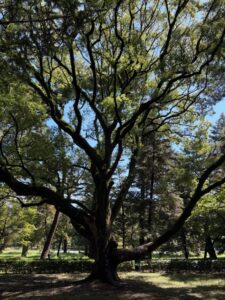
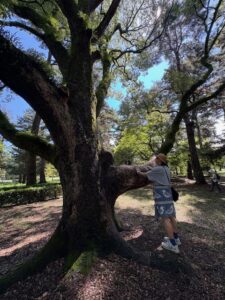
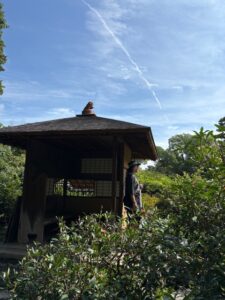
Next was September 18. We set out from Marutamachi again, and since “Shosui-tei”—a tea house associated with the Kujo family located in the southwestern part of Gosho—was open to the public, we stopped by.
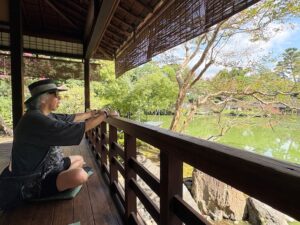
This is the site of the Edo-period residence of the Kujō family, one of the court noble families whose roots trace back to the Fujiwara clan—which flourished during the Heian period—and whose members served as regents and kanpaku (chief advisors to the emperor) for generations.
During the Momoyama period, as part of Toyotomi Hideyoshi’s urban planning, the family relocated south of the present-day Kyoto Imperial Palace; during the Edo period, they built a residence covering approximately 35,000 square meters, including the garden. Following the Meiji Restoration, the Kujō family also relocated to Tokyo. Most of the buildings were either relocated or demolished; the “Shūsui-tei” that remains today is only one-hundredth the size of the original (130 square meters).
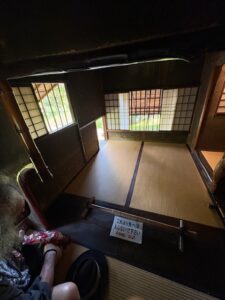
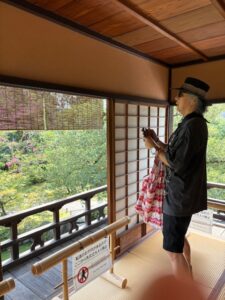
Both the garden and the interior allow you to sense the spirit of beauty and the richness of the soul that characterized that era.
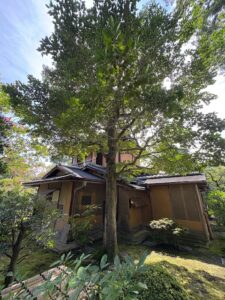
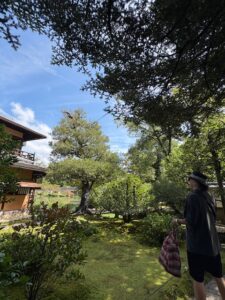
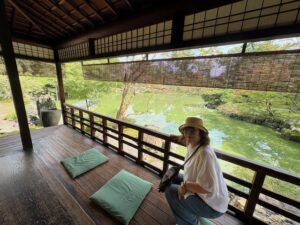
People back then must have gazed out at the pond and enjoyed the changing scenery of the four seasons. Time passed differently back then than it does today.
It’s the perfect spot to stop by during a walk.
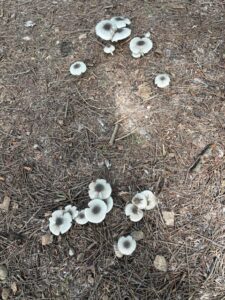
When we returned to our walk around the Imperial Palace, we saw many different kinds of mushrooms popping up here and there on the ground after the long spell of rain.
Savoring the feeling of autumn, we enjoyed our walk under the brief spell of clear autumn weather all the way to Demachiyanagi.