Blog&News
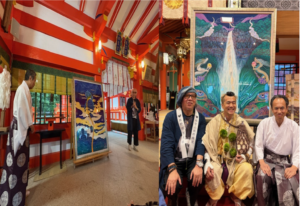
On the morning of June 7, 2026, after concluding the dedication ceremony at Kumano Hongu Taisha, we headed to Kumano Hayatama Taisha. The dedication ceremony at Hayatama Grand Shrine began at 1:30 p.m.
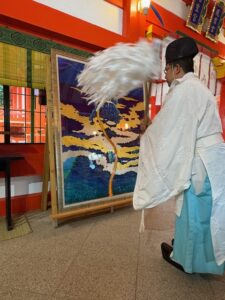
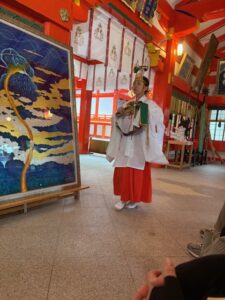
The rain has gotten a little heavier, but, the rain folling through the gaps between the pillars of the beautiful, high-ceilinged vermilion worship hall actually certain charm, the air was crisp, and the sound of the rain was soothing, creating a unique ambiance.
The remarks by Chief The remarks by Chief Priest Ueno of Hayatama Grand Shrine were very memorable.
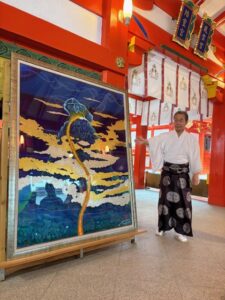
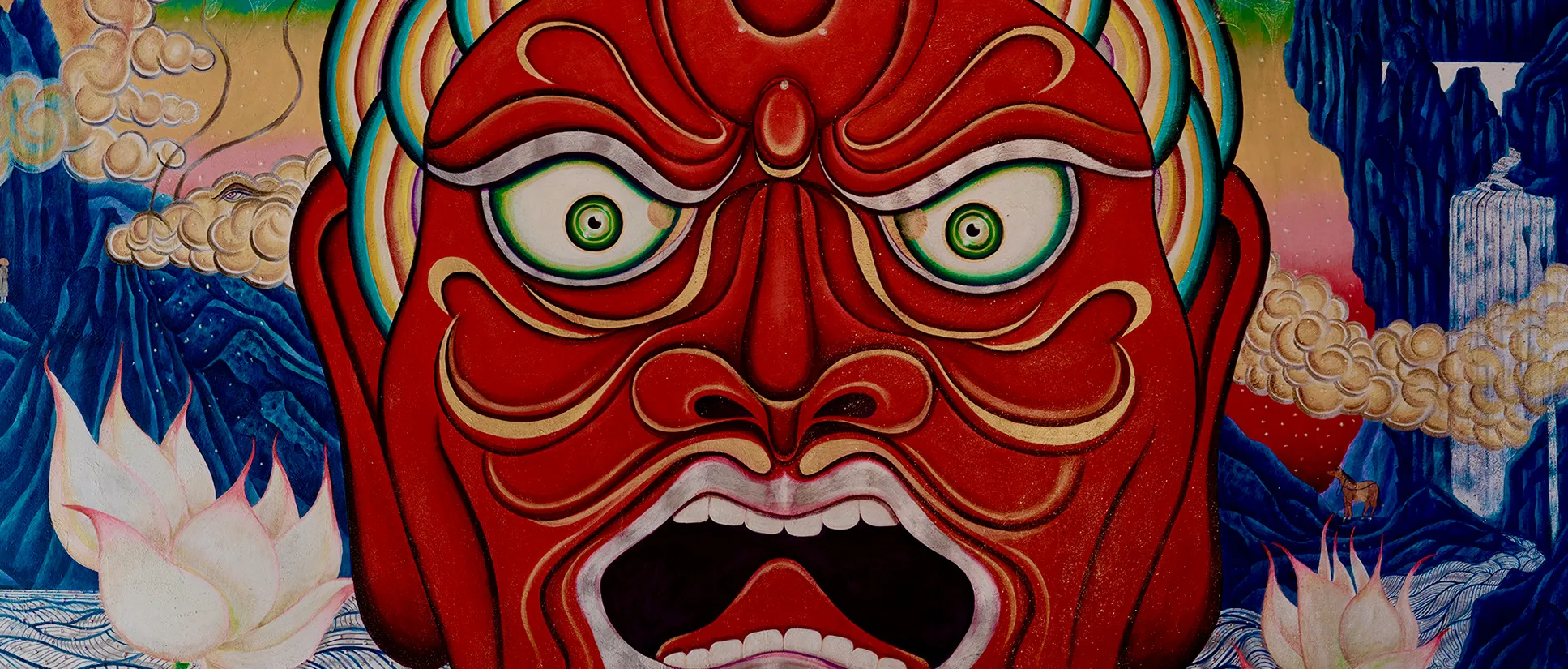
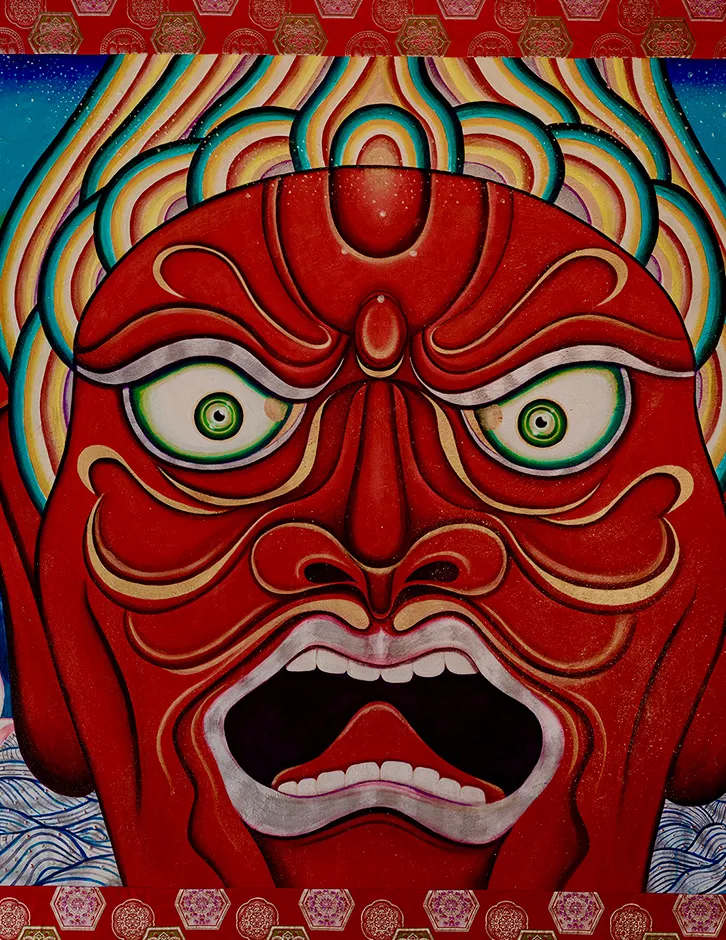
Upon learning that Shiozawa had painted the dedicated artwork *The Sacred Fire of Gotobiki Rock* from the perspective of the cosmos, he spoke highly of the work’s significance.
In addition, the dedication paintings for only the two shrines were approved, and he expressed gratitude for the divine will that had brought together the dedication paintings for all three shrines—noting that Shiozawa’s prayer beads had broken the moment he descended from Mt. Kamikurayama.
He remarked that the energy of our prayers is essential to putting an end to the ceaseless wars.
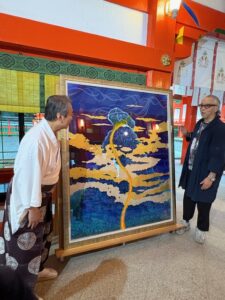
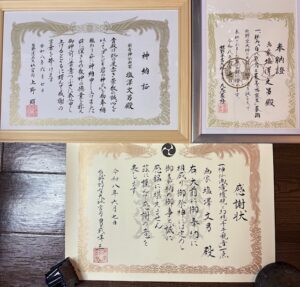
The chief priest of Hayatama Grand Shrine presented a certificate of appreciation to Shiozawa.
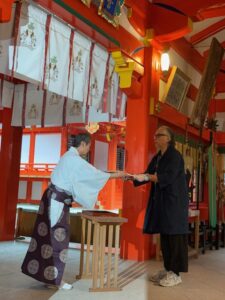
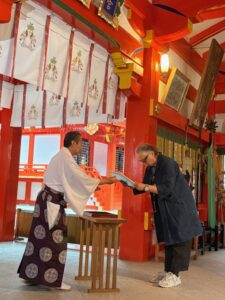
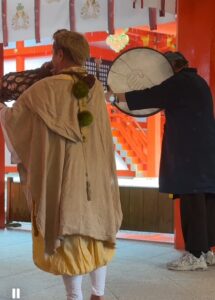
Amid the crisp air inside the rain-soaked worship hall, a magnificent purification ceremony featuring the conch shell and drum took place. The sounds resonated beautifully throughout the high-ceilinged hall.
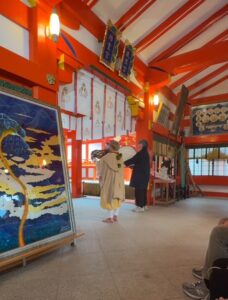
We took commemorative photos with many of you.

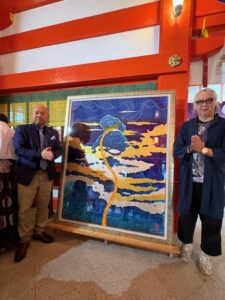
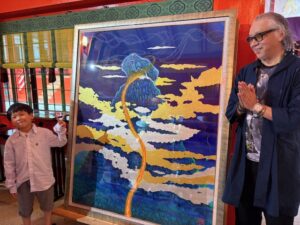
We would like to express our deepest gratitude to Chief Priest Ueno for his exceptional hospitality during the dedication ceremony.

We arrived at Nachi Taisha. By the time we made our way to the worship hall, the wind had picked up and the rain had become quite heavy. Even with umbrellas, everyone was soaked to the bone by the time we reached the worship hall from the shrine office.
However, once we stepped inside the worship hall of Nachi Taisha and the opening drumbeat of the “Shōden Sanpai” ceremony rang out at 3:30 p.m., we were so captivated—and felt so close to the god—that we completely forgot about the rain. The main hall was wide, allowing me to take in both the shrine maidens’ dance and the votive paintings at the same time, creating a sensation as if I were watching a performance in a theater.
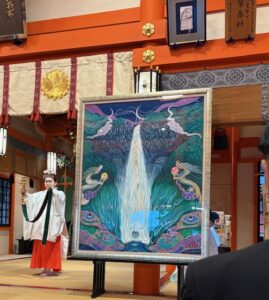
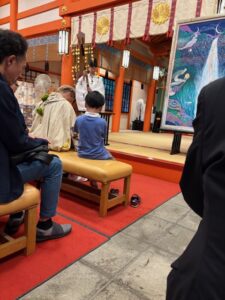
Once the series of ceremonies had concluded, certificates of appreciation were presented.
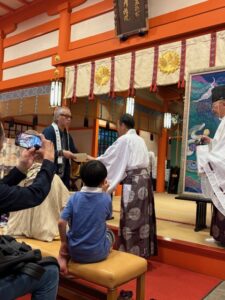
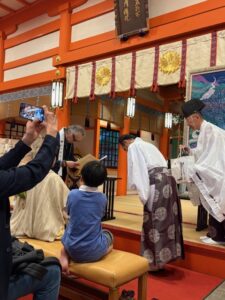
Chief Priest Otokonari remarked, “At Nachi Taisha, where many artistic performances are dedicated, it often rains heavily whenever paintings, music, or other offerings are presented. I believe this is a sign that the god of the waterfall is moved. We are purified by the spray created when the rain that falls on Nachi becomes a waterfall and crashes against the rocks, and we receive his divine protection.”
I recalled that last October, when the Noh play “Jimmu” was performed at Nachi Taisha, I watched it in the pouring rain.
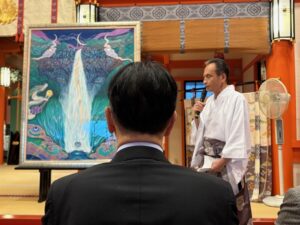
In the worshi hall, the sounds of conch shells and drums created a fusion of nature and art, and I could clearly feel that the gods were pleased.
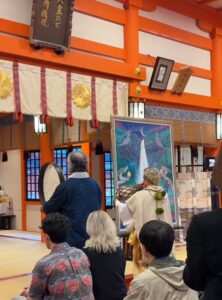
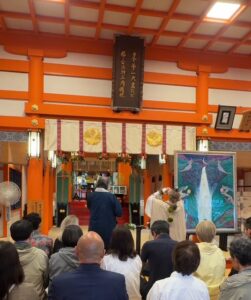
Once again, Shiozawa expressed his gratitude to everyone for staying with him until the very end of the third shrine.
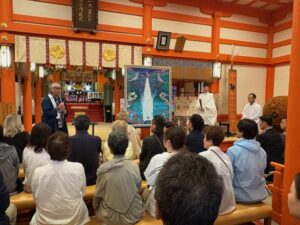
The event concluded after 4:30 p.m., and many of you, having completed celemony at the three shrines, drove home in the rain that same day. We would like to express our heartfelt gratitude.
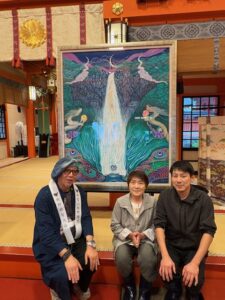
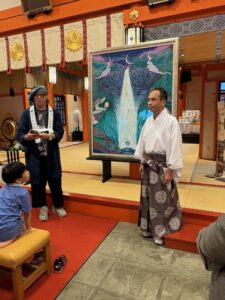
Today’s final ceremony at Nachi Taisha was a truly memorable and wonderful dedication ceremony.
I would like to express my deepest gratitude to Chief Priest Otokonari for allowing us to conclude the series of perfect dedication ceremonies at the Three Shrines of Kumano with this event at Nachi Taisha.
We would also like to express our gratitude to Mr. Miyashita for performing the conch shell music during the offerings at the three shrines.
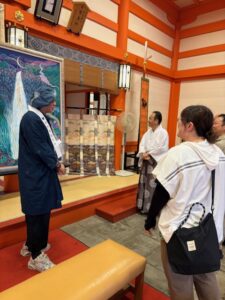
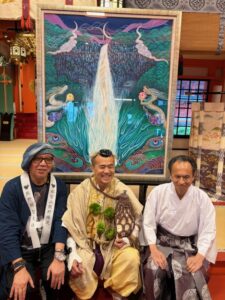
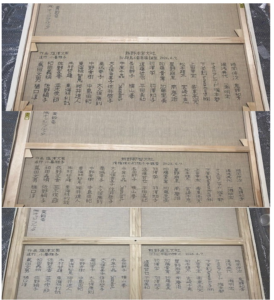
We would like to express our heartfelt gratitude to all of you who have supported us by having your names listed on the back of the donated paintings.